Sunday, July 12, 2020

fixing things that aren't broken: les miserables

like everyone else, i love les mis. the book, the play, even the hugh jackman movie. but i do have some ~~issues~~ with it, especially as a non-believer in the abrahamic god. but i’ll get to that in a minute.

but first, why do we insist on everyone using british accents? sure, in the original production, it made sense for gavroche to be a cockney little oliver twisty lad, but if we’re shooting for cultural equivalence, shouldn’t his american cousin at least sound like he’s from brooklyn or something?

but more importantly. “who am i” is one of the most emotional, moving moments in the play. it’s jean valjean reckoning with the ghost of his past (even though he didn’t actually do anything wrong) and deciding what kind of man he’s going to be. it’s an epic battle between self-interest and moral rightness.

except it isn’t.

in the song, he explicitly reasons, “if i speak, i am condemned. if i stay silent, i am damned.” textually, he’s a committed christian. “my soul belongs to god” and such.

which means that what he’s really choosing between is one punishment - the punishment of man, of javert, of prison and hard labor (and another opportunity to get really, superhuman buff) - and another, the punishment of god, which will presumably be even worse and last a hell (lol) of a lot longer than anything javert can throw at him.

jean valjean’s got none of, say, hamlet’s doubt after the afterlife.

so his epic struggle isn’t really one. it’s simple math. rational self-interest forces him to turn himself in.

but there are a few lines in the song-soliloquy thing that i always wished got more attention.

“i am the master of hundreds of workers, they all look to me / can i abandon them / how would they live, if i am not free?”

yep, jean valjean’s also a capitalist i guess? but a good, benevolent, santa-claus type capitalist. as well as a mayor. he’s been busy.

he pays lip service to this social-good argument, but then seems to dismiss it. it never really plays a role in his decision making. but in my new, altered version of victor hugo’s masterpiece, which i randomly thought of on the bus this morning and am now writing in lieu of doing actual work at my actual job - it does! “who am i” has serious stakes and consequences now! hear me out. in my version:

  • valjean still decides to turn himself in, but we take god out of it. instead, we dwell on the “how can i ever face myself again” self-respect, conscience, kantian do-gooding argument

  • because he turns himself in, “the foreman” takes over as head of the factory. probably valjean knows or suspects this will happen, and the negative effect it will have upon the workers, since “the foreman” (who we probably ought to give a name) is a bad, exploity capitalist

  • the foreman then has the power to fire fantine for all the nonsense in “at the end of the day” and send her down her tragic path to ruin 
all this really does is move a few events around (and toss out the centerpiece of hugo’s entire worldview and that of billions of people around the world), but i think it has a huge effect on the story. now valjean’s sense of responsibility for fantine and cosette makes more sense. he doesn’t just allow fantine to be fired out of - what? apathy? indifference? - but actively causes a sequence of events that lead to her misfortune and ultimate death.

doing the right thing sometimes has consequences. and so being a moral person requires not only doing it, not only accepting those consequences, but also taking responsibility for them and working to make them right again.

oh, also, we don’t need the stupid cart accident, valjean-is-strongest-boy subplot, which i’ve always hated, too.

and let's have eponine realize she's too good for marius right before she dies because, obviously.

Thursday, June 18, 2020

Three Straight Dudes (and a Ghost) Weigh in on LGBT Rights

In 2015, it was gay marriage. In 2018, gay cakes. And in this shark-jumping year of 2020, June has brought us a ruling on workplace protections for LGBT people.

For all its faults, the Supreme Court does seem to get the optics of Pride Month.

The fun twist this time around is that the majority opinion was written not by RBG or Sonia “So-So” Sotomayor, but the great usurper Neil Gorsuch. Which means that, for a change, we get to hear from three different straight white guys regarding gay rights.

All three of them are committed to some serious hand-wringing about how they know, love, and cherish LGBT people - and (in the case of Alito and Kavanaugh) they wish the Civil Rights Act of 1964 had included sexual orientation and gender identity, they’re so sorry, obviously it should have, we all agree on that, but it just didn’t, gosh-darn-it, frowny-face-emoji!

A lot of Justin Timberlake in Bad Teacher “I just hate slavery so, so much!” energy.

It’s pretty funny to read, honestly. And maybe we can take it as a good sign that they're all pretending to believe that. It’s disingenuous lip service, but it’s what the future will see of them. At least the visible arc of the universe is bending towards justice.

The question is: when an employer fires an employee for being gay or trans, are they discriminating based on sex? So it all comes down to how these middle-aged dudebros define sex. And not in the fun, Bill Clinton way. We’re talking about sex in the seventh-grade biology class kind of way, unfortunately.

So let’s talk about sex, baby.

#1: G.

Drawn to the News: Nomination of Neil Gorsuch to Supreme Court
My man even looks dull in political cartoons.
Gorsuch (nicknames include Neil Bore-such, Neil Bore-suck, and Real Bore-suck, depending on one’s preferred pun-to-real-name ratio), seems to conceive of sexual orientation as an equation:

being gay* = being a man (sex) + being attracted to men

being a lesbian = being a woman (sex) + being attracted to women

*(for the purposes of clarity, I’m using gay here as a gender-exclusive term, like lesbian)

Therefore, if you’re fired for being gay, you’re fired for one trait that your employer tolerates in others (being attracted to men) and another that is protected (your sex.) And since it doesn’t have to be only your sex that causes the termination (a woman who is fired for being a mother, for instance, is still discriminated against for her sex) bada-bing-bada-boom, gays are a protected class.

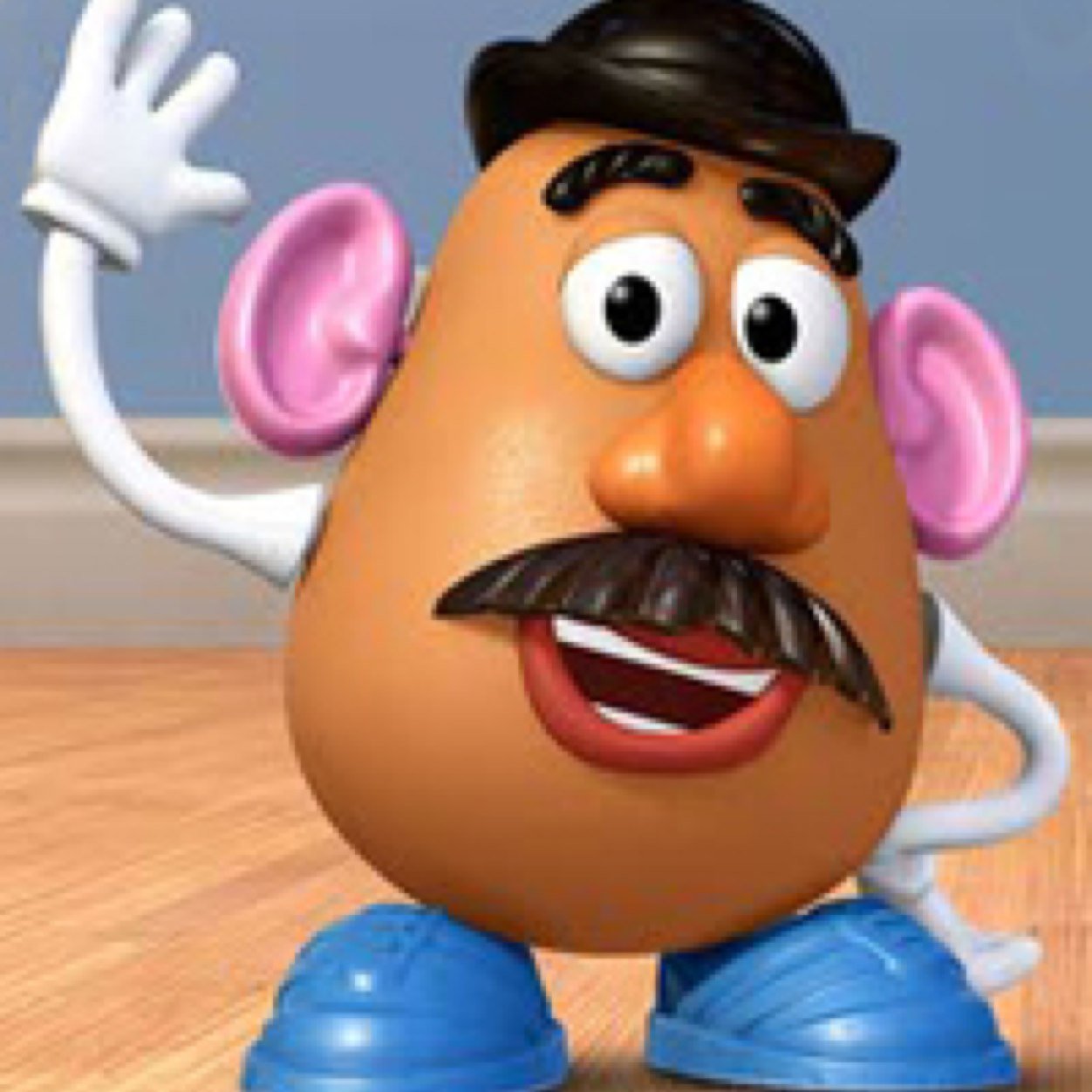
It’s interesting to think about - (and I’m certainly happy about the effects that Gorsuch’s mental gymnastics will have) - but it’s kind of a stretch. It suggests that people are like Misters Potato Head, with traits that can be swapped in and out at will. Or it's John Locke’s idea of substances and properties, which I was led in Philosophy 101 to picture as a styrofoam ball with toothpicks sticking out of it.

And I’m pretty sure that’s an idea that only a straight person could come up with.

Mr. Potato Head on Twitter: "Tato 3. Soon. Like idk after RRBB16 ...
Pictured: daytime TV show host / evolution
denier Steve Harvey.
How did the anti-Gorsuch, Virginia Woolf, put it, in a passage from Mrs. Dalloway so beautiful and subtle you might not even realize it was about a lesbian fling?
The strange thing, on looking back, was the purity, the integrity, of her feeling for Sally. It was not like one’s feeling for a man. It was completely disinterested, and besides, it had a quality which could only exist between women, and women just grown up. It was protective, on her side; sprang from a sense of being in league together, a presentiment of something that was bound to part them (they spoke of marriage always as a catastrophe), which led to this chivalry, this protective feeling which was much more on her side than Sally's.”
Now, some of the uniqueness of Clarissa's youthful feelings for Sally were because of the stigma against same-sex relations at the time. And that is relevant here. Because same-sex attraction is so often repressed, at least when you’re young, it is never going to be qualitatively identical to opposite-sex attraction. In fact, that was probably even more true in 1964 than today.

It is also inextricably bound up with her own sex; “being in league together" the key phrase. It's not the same as Clarissa's feelings for her husband, nor her husband's feelings for her. It's its own thing, qualitatively unique.

“Attraction to men” as a single trait rather than a weird abstraction strikes me as absurd. Maybe it’s possible that some Vulcans out there would consider people in those terms, but I doubt any actual queer person would use that language to describe themselves. It’s intersectionality in the most literal, additive sense. No sense of synergy. The business world would not be proud.

#2: A.

Sam “Saucy” Alito, on the other hand, holds that “homosexuality” is a trait unto itself, shared by gay men and lesbians alike. This is an abstraction, too, albeit one that serves very different ends. But it is just as indicative of a potato-head view of identity. 

Alito wrote a lot of words. Following the principle of “those who write the longest books have the least to say,” (present company included) let’s move on:

#3: K.

I can’t believe I’m saying this but Brett “The Boofer” Kavanaugh may have the most interesting take here.

He makes a distinction between literal meanings and the “ordinary meaning” of phrases, with lots of fun examples of things that could be read as meaning such-and-such. The term “vehicle” could include “baby stroller” but “no vehicles in the park” is never taken to mean that (except by people who actually enjoy language.) One to add to the mix: when a random guy on the street starts talking to you about how there are chemicals in the water, man, do not on any account agree with him on the grounds that, yes, hydrogen and oxygen are technically chemicals.

Kavanaugh’s refusal-to-interpret does remind me of when people claim that their arguments are just common sense; so obvious that they’re not actually arguments at all. They’re just stating facts. Just “telling it like it is. Being “objective.” And yet: Gorsuch, on the other side of the fence, says he’s doing the exact same thing.

John Oliver Tells Donald Trump to Drop Out of the Election | Time
I sometimes wonder if John Oliver's most enduring
legacy will be the popularity of the ending-a-sentence-
with-a-first-name thing and the subsequent rise of
"Karen" as a term of derision.
So Mr. Devils-Triangle's point is that yes, “discriminate based on sex” could be stretched to include sexual orientation but usually people don’t think of it as meaning that, so let’s not do it. It’s a lot of “don’t think too hard, folks. I may have gone to Harvard Law but I’m still just one of you. I drink beer, remember?” And it’s pretty lazy. If people had commonly understood discrimination based on sex to include sexual orientation, then we wouldn’t be here in the first place. This is literally why we have a Supreme Court, BRETT.

#3.5: Textualism

All of these justices are committed to “textualism,” which my spell check (I think rightly) does not recognize as a word. They claim they are not actually interpreting the text (that’s what dirty liberals due) but just sussing out what the text in itself actually says. Which, in the English literature world, is called New Criticism and, like many things with New in its name, is so old that no one does it anymore. (Think New Coke.) Because there’s no such thing as the text itself, or everything’s part of the text, depending on which post-structuralist you ask.

Despite the fact that these three men are all just looking at the text itself, staying within its “four corners,” they don’t agree on what it means. Almost as if they’re doing interpretation!

Now, if only they would admit it, then we could actually have a meaningful discussion about which interpretation makes the most sense. But they’re so committed to obscuring their own role; they’ve overlearned that personal pronouns are the worst sin a writer can commit - to the extent that they even say “the Court” when they mean “Neily Neil and his Lefty Bunch” and talk about what “it” has done and said. (Somehow animism is acceptable in this literalist tradition.) So you get two belligerent donkeys braying back and forth, making the same sound but meaning different things by it. “SEX!” “NO, SEX!” “NO, SEX!”

#4: The Ghost of Antonin Scalia

Like Hamlet’s dad or Bambi's mom, the ghost of Antonin Scalia looms large over the whole opinion. He’s their Syd Barret; their Kurt Cobain; their Marx. Not only do they cite his opinions and name-drop him continually, but every time they say “textualism,” they’re really saying “Scalia.” As if he’s Beetlejuice (or Bloody Mary) and saying his name enough will get him to appear. (Even a lot of the context around this decision refers to Gorsuch as occupying “Scalia’s seat,” which no, he doesn’t. If anything, it’s Merrick Garland’s seat. #Neverforget.)

And reading this decision does kind of make me miss that fucker.

Blowhard though he was, he was at least more entertaining than these dullards. He knew how to put some absurd into his reductios ad absurdum. Scalia would have written a blistering dissent here, which could then be turned into an epic song by Coheed and Cambria.

So WWASD?

Well, he’d accuse the liberal justices of trying to legislate from the bench, to rewrite history, to add 2020 sensibilities to 1964 terminology. Alito and Gorsuch try to do this too, but without Scalia’s wit and precision. The closest one of them gets is the quip “Seneca Falls was not Stonewall.”

I don’t think spectre-Scalia is necessarily wrong about this, but I’m not convinced it’s such a horrible thing. Why do we care so much about the only-Congress-can-make-laws thing? Clearly the Executive Branch hasn’t stuck to that playbook. Yes, separation of powers is built into the Constitution, but also, like, the Founders were just a bunch of guys trying stuff. Founding Fathers is misleading. They were just some bros. Madison was 36 writing the Federalist papers. Hamilton was even younger.

For context, Lin-Manuel Miranda is 40.

So Scalia would surely bloviate for awhile about textualism and originalism - you know, like how “arms” only means what it meant in 1789 and speech doesn’t include anything that George Washington couldn’t have done (Tweeting being perhaps the one skill that Trump has over old George.) And then he’d start having fun.

What about, my Antonin might ask, a person who is fired for being a male Indigo Girls fan? Imagine an employer who believed, absurdly, that the Indigo Girls were only for women. She allows and even encourages her female employees to blast “Closer to Fine” all the live long day, but when Joe (with an “e”) shows in with his vintage 1997 Lillith Fair t-shirt, he is sent packing. Go listen to Dave Matthews or Dispatch instead, he is told, like Tony-with-a-y or Rene-with-one-e, who are both allowed to keep their jobs.

Lilith Fair Shirt 1997 | WyCo Vintage
Pairs nicely with paint-stained overalls.
Is Joe’s not an identity that is built upon two traits, one protected and one tolerated in others?

Or, old Scaly might continue, are those traits too easily separable for the Court? Must we find an example where the trait is “inextricably tied” to sex (nevermind that, in distinguishing attraction from sex, the Court has proven that they are, by definition, not inextricable.) Consider the Brony. A Brony is, by definition, a male fan of My Little Pony. One cannot be a Brony without being male. Are Bronies now a protected class?

Indeed, the Court is setting the precedent that any identity which is bound up with an employee’s sex - or race, for that matter - cannot be grounds for termination. So what about a black female employee who is let go for having a “poor attitude” and acting “aggressively” towards her co-workers? Couldn’t she make the argument that those terms are applied differently to those of different races and sexes? That a white man behaving the same way would be perceived as “take-charge?”

Are there any terms that it can be proven are not bound up with sex and race if an employer is aware of the employee’s sex and race? Don’t the libs believe (or claim to believe) that everything is connected to sex and race (and to everything else)? In order to prove equality of opportunity beyond a reasonable doubt in such a climate, there must be equality of outcome.

And so on and so forth. As The Dude said, in a movie I have not actually seen, he might not be wrong, but he certainly would be an asshole.

#5: So . . . 

So where does that leave us?

Scalia is dead and no one on the Court now is really filling his robe, though they’re all trying desperately to. But he would be the one to take the principles at stake to their natural conclusion, 

Or we could go with milquetoast (and milk-toast, for that matter, as long as the toast is made from white bread) Gorsuch and his arithmetic, Sims-person approach. A bad argument for a good end.

Or side with the boogeymen of the liberal wing, who like Mario or Link never actually get to speak for themselves here, but I suspect probably are trying to use their platform to advance the banner of progress, the letter of the law and the particulars of parliamentary procedure be damned. The theater is on fire; who cares if people are in their assigned seats!?

I just wish they’d own it. Congress certainly isn’t doing it any time soon.

And in any ordinary workplace, when one job isn’t getting done, and it needs to be done in order to keep the place running smoothly, you step up and do that job, even if it isn’t your assigned role?

What kind of McDonalds employee would let the burgers sit un-ketchuped just because Dalton is technically on Sauce Duty and he’s out back having an impromptu smoke break slash impromptu argument with his girlfriend?

Lot of libertarians get all hot and bothered about what is a state decision versus a federal one. It’s a jurisdictional argument and frankly - who gives a shit? Isn’t it better to have the federal government step in to protect the lives or liberty of vulnerable populations than sacrifice them to the altar of the 10th Amendment? It’s a mark of privilege to get to care more about who makes a decision rather than what decision is being made.

Division of labor may generally lead to productivity and impartiality, but it’s not sacred. It’s a means to an end. At some point you do have to start looking at the effects of your behaviors more than whether they adhere to some pre-designed system. And in terms of impact - this decision means that a lot of LGBT people will get to keep their jobs! Sure, it’d be nice if Congress would pass a real update to the Civil Rights Act, but in the meantime, I think I'm okay with a little bit of cheating.

Sunday, June 14, 2020

Neville Longbottom is the Hero of the First Harry Potter Book. Here's Why That Matters.

Tolkein is on record saying that Samwise Gamgee is the true hero of Lord of the Rings. As far as I can tell, J.K. Rowling has never explicitly said the same of Neville Longbottom, but it does seem like the kind of thing she would say, doesn’t it?

She’s clearly interested in Neville as a character. She made him the anti-Harry; the there-but-for-the-grace-of-Voldy stand-in; the unsung hero of the alternate seventh book that actually takes place at Hogwarts instead of random woods (free fanfic idea); the only person besides the Golden Trio and Dumbledore to actually destroy a Horcrux; and rewarded him with the true in-universe hottie, Hannah Abbott.
Truly amazing that ALL of the 11-year-old 
kids they cast grew into attractive adults.

But I’m hung up on what happens in the first book, Harry Potter and the Philosopher’s Stone. (British title or GTFO.)

*

Now, before we begin, elephant in the room: there has been a thumbnail popping up on my Youtube suggested video feed entitled “Does JK Rowling’s Transphobia Ruin the Harry Potter series?” I don't think so, and not just because every title that is a question can be answered with the word "no."

And I do think it’s worth reading JKR’s post on her website about trans issues. Whether you agree with her conclusions or not, and I don't, there's some nuance there that binary, all-or-nothing thinking tends to miss.

But I do enjoy going back to the Harry Potter series and seeing the ways in which her political views, now made manifest, were latent in the Art. You can compare gender assignment to Hogwarts houses; you can realize that Harry grows up to be a wizard cop; you can reframe the entire series as a battle to preserve the status quo.

Or you could focus on a boy called Longbottom.

*

At the end of Harry Potter and the Philosophers Stone, Dumbledore does what is universally acknowledged to be a dick move. He allows the Great Hall to be decorated in Slytherin colors, knowing full well he is going to take it away from them in a few minutes, just to stunt on a bunch of eleven year olds. I mean, I get the impulse. I've taught middle school. But still.

But then he takes it a step further and does the whole thing piecemeal. Tantric style. Points to Harry, Ron, and Hermione, just in case we didn’t get that each of them used their respective skills to solve one of the puzzles. Almost like they were deliberately designed for that! Now, there’s clearly no established system for how to award points to houses, and there's some serious inflation later on in the series, so Dumbledore is being totally arbitrary, as usual. It's good to be King. And so he makes it so Gryffindor and Slytherin are tied. Eight-year-old me was chewing on his shirt in feverish anticipation.

Then the coup de grace: five points to Neville Longbottom because - and this is a very important quote -

"It takes a great deal of bravery to stand up to our enemies, but just as much to stand up to our friends.”

I’m pretty sure this is exactly what JK Rowling thinks she is doing, like all the time. That is why, as a liberal, she spends more time criticizing the political left than the conservatives. She’s not quite a South Park both-sidesist; more of a Bill Clinton trying to have her Sista Souljah moment over and over.

Deep.
This is clear in her latest Robert Galbraith book, Lethal White, too*. It's a mystery, but there’s some politics mixed in there. The conservatives are blandly bad in predictable ways, but you can tell she had a lot more fun satirizing the leftists. They're all trust fund kids cosplaying as radicals (which is certainly not not a thing, but the glee!

And back to the ever-expanding Harry Potter universe, the same thing is basically going on with Grindelwald too. Whereas the original series was good ol' Manichean good versus evil, light versus dark essentialism - Grindelwald is that “new breed” of villain, along the lines of, say, Rorschach from Watchmen or President Coin from the Hunger Games series or what’s-her-name from Divergent. The one who has some interesting ideas but simply Goes Too Far with them. The Western liberal party line on communism, basically, filtered through Animal Farm.

I don’t disagree with this, necessarily. It is, of course, possible for revolutionary movements to become the antithesis of what they intended to be. But it’s not inevitable. Nietzsche didn’t say anyone who even thinks about fighting monsters thereby becomes an even worse monster.

*

Back to Neville. It can’t be a coincidence that he shares a name with the Prime Minister famous for delivering peace in our time through diplomacy, which I grant probably was an act of bravery in the sense of standing up to your friends, and it's not totally his fault that the other guy turned out to be, no, like, actually, really bad.

Worth it for this alone.
As a kid, I was pissed that Neville got those 5 points. I was happy that Gryffindor won, of course, but it didn’t seem like he deserved to be rewarded for trying to stop HARRY, RON, and HERMIONE. If he had succeeded (I screamed at my book), then they never would have stopped Quirrell-Voldy** from getting the stone, and then he’d have eternal life and infinite money or something, hyperinflation be damned, and we’d all be screwed. Is that really the kind of behavior we want to encourage, ALBUS?

But looking back, it turns out Neville was right. Or at least Harry was wrong. Not just wrong about Snape, but wrong about the whole you’re-the-only-one-who-can-save-the-day thing. (As he would be again, in Book 5, and arguably in Book 7 as well. [There were no Horcruxes in the goddamn Forest of Dean - they were at Gringotts, the Ministry of Magic, and Hogwarts - you know, Significant Locations We've Visited Before.)

If they didn’t go Chapter 16 Through The Trapdoor, Voldemort would never have gotten the Stone. Dumbledore, idiot savant that he is, recognized that all his employees created traps that could be beaten by eleven-year-olds, said If you want something done right you gotta do it yourself, and actually came up with a genius, foolproof method to secure the stone. You can only get it if you don’t want to use it. (Kind of like what Douglas Adams said about the Presidency: no one who wants it should be allowed to have it.)

So the takeaway is: trust the system, trust the adults in charge, you don’t have to act, just listen to the people who are telling you to stay in bed like good little boys and girls. That’s real bravery***. That’s what it really means to be a Gryffindor. It’s counterintuitive, therefore it must be true.

Because if you rock the boat, you could be killed - or worse, expelled! 


*****


*which arrived in my mailbox THREE MONTHS after I ordered it online from the UK, which I understand, international shipping in the time of COVID and all - , but in an astounding coincidence, it arrived on the very day I finally decided to say "fuck it" and email the bookseller about a refund, which made me feel like i really do control the universe.

**in another not super progressive move, an image that surely inspired an entire generation to be leery of men in turbans

***this is commentary on the political-activism sphere of The Present Moment, not the COVID one, where yes, basically everything is the opposite of what it normally is, up is down, down is up, staying inside all day and only talking to people via screens is healthy, etc etc etc.

Wednesday, March 11, 2020

Confessions of a Free(down)loader

I download music illegally. So do you, probably. Or you used to.

At the very least, you tried it once in college and it didn't affect you that much so you didn’t bother doing it again.

But lately I’ve been thinking about why I download music illegally. (Movies, too, when they’re not on the only streaming service I actually pay for, which is the one you just thought of.) And I don’t think it’s only because I’m cheap. 

(Although I definitely have an absurd and probably unhealthy relationship with money. To illustrate: I would never pay $10 for airplane Wifi, but I would pay an extra $10 for a flight with free Wifi.)

I’ve got two theories: the personal and the political. And, as always, the truth is probably some tincture of both of them. You decide the proportions.

First: downloading music feels like a hunt. It taps into some primal instinct that recoils against being handed things too easily. You've got to type 10 different variations of what you’re looking for into Google (“fleet foxes download album zip,” “fleet foxes 2008 free download online rar,” etc.); navigate the seedy websites of the wild wild west of the world wide web, which look ancient enough that you can actually use phrases like “world wide web”; play a round of rooftop “he’s the fake, I’m the real one!” with the download buttons; and after all that, cross your fingers and pray that when you open the file it doesn’t ask you for a password. There’s a perverse thrill to it.
Pictured: Will Smith's attempt to be Woody, since
he had already been Buzz with Men in Black, and/or
 round out the Back to the Future trilogy. Little did he know
the secret was to combine them, as in NSYNC's tragically
underrated "Space Cowboy" (featuring Lisa "Left Eye" Lopes!)

Plus, going through all those steps gives me time to reflect if I really want to download this album. Do I care enough? Or could I live without it? And hey, while we're here, what is desire, anyway?

One-click downloading leads to impulsivity. Which, of course, is the point.

Which brings me to the systemic issues at play here. (I know - never a sentence anyone likes to hear.) Under capitalism, art was turned into a commodity. A product to be sold and bought. Which - fine. Not ideal, but at least it makes sense. Say what you like about capitalism (and plenty of people smarter than me have said plenty) but there is a consistency to its logic that you’ve got to admire.

But then, at some point, music underwent a de-commodification. It is no longer tied to anything physical. Anything that can be understood as “property,” whether you believe in property or not. But they managed to keep the transactional framework in place, except that now you are not actually paying for a thing. You’re paying for digital code. Ones and zeroes, right? And it’s not like they have to make the ones and zeroes separately each time. Once the files exist, they can be downloaded once, twice, a thousand times, and it makes no difference. And something about paying for that seems absurd.

I wonder where this will go next. Money itself got de-commodified a while ago. It may have even been the first casualty, which probably means something. Clothing? As of right now (March 11th, 2020, appx. 7 AM), when you buy a shirt, you're still buying an actual, literal, physical shirt. It’s been well documented that people will pay more for a shirt that bears a certain brand logo (or one that is stamped invisibly with the "Kanye" brand), but at least there’s still a shirt involved. But imagine if you already had the shirt and you could just pay for the Nike or Supreme logo to be projected on there. 

I'm not 100% sure about the technology this would require, but I feel like if it doesn’t already exist, someone’s working on it at some start-up somewhere.

Saturday, March 7, 2020

Lunch Money

No one ever thought about how things would affect the bullies.

They were the real victims, when you thought about it.

A bully was supposed to say “give me your lunch money.” That was what Cody Burrell (the perfect bully name - what had his parents expected?) had learned from TV. Animated and live-action; scripted and documentary. It was one of the only constants in life. You grabbed the short, scrawny kid by the collar of his shirt, pushed him up against a locker, and said, “Give me your lunch money, punk!” It was that or head-in-toilet, but that took a level of upper-body strength that Cody, at eleven, hadn’t acquired yet.

But at his school they didn’t have lunch money. They had cards. Stupid, little, laminated-piece-of-paper, ugly, yellow cards with your name and number printed on them, which you handed to the lunch lady at the end of the line and she ran it through some scanner and that was it. Whether your parents put two-hundred bucks in your account every month to cover your daily snack bar habit - rounds of Hot Fries and Chipwiches for the whole squad - or you were deep in the red, or you were one of the free-and-reduced lunch kids, it was all the same. The day of reckoning came later, when the teacher put folded, stapled slips of paper into everyone’s cubby, your total balance just hidden under the fold. More private than report cards, because with report cards the first thing everyone did was rip open the manila envelope and shout out, “B in Science, what’d you get?” or “Mrs. J. gave me a D!" 

But you couldn’t steal someone’s lunch card. 

Cody tried once anyway. He chose his target very carefully and deliberately, since he figured he'd only get one shot. Carter Banks was on the small side, quiet, a reader; he came from a happy, stable, middle-class home, an actual house with a yard, two parents who both worked and cooked and did Activities on weekends; plus, he had the same initials as Cody, so if the lunch lady looked quickly, she might think it was the right name. She usually didn’t look, but you had to be prepared. 

Cody chose his moment deliberately, too. It had to be before lunch, obviously, but since lunch for fifth grade was served at ten-thirty-five that was more of a limitation than you might think. It also had to be after the teacher took the lunch count, so he knew Carter was getting hot lunch that day. Sometimes his parents packed him one. And if you tried to buy hot lunch when you hadn’t signed up for it, maybe your card wouldn’t work. Cody didn’t know this for sure, but again - preparation. Why else would the teacher need to take the lunch count? It couldn’t be just to put the stupid little name magnets in their proper places on the board. Could it? 

So that left Cody about two hours to work with, most of which was going to be spent writing down random numbers on math worksheets (you got full credit for completion) or silently reading their respective versions of the same stupid story about a boy and his dog (green, yellow, and red, as if no one could crack that code.) But there was a fifteen-minute recess that started at nine-fifty, and before recess, there was a moment where everybody went to the cubbies and put on their coats. It was March, it was warm, the snow was all melted, but you had to wear your coat outside. 

In the cubbies, you were shielded from the teacher’s eye. All you had to worry about then were the rats. 

Each day, they went to the cubbies in a different order. Sometimes it was boys, then girls (or girls, then boys); sometimes it was by birth day or birth month; sometimes by favorite color (as dictated by a chart on the wall, from September.) None of these would work. But here again Cody's genius made itself manifest. Some day the teacher would send to the cubbies by name, first or last, and then he and Carter would be back there together, and hopefully none of the known or likely rats would be with them, and he could have his moment. 

It wasn’t lockers, and it wasn’t money, and he wasn’t going to say “punk,” but it was the closest he was going to get. 

Cody started a new routine: at as close to nine-forty as he could manage, he would get up from his seat, write his name in messy print on the sign-out sheet by the door, take the Boys’ Pass (a rectangular block of wood, painted blue) from its hook, and head to the closest bathroom. There, he would splash a bit of water on his face, and stare at himself in the mirror. A fat, freckled face and a tuft of orange hair stared back. “You can do this,” he would mutter. He’d pound his fist into his palm and try to look mean. 

One day, as he performed his ritual, he knew, intuitively, with absolute certainty: today would be the day. 

It wasn’t. 

But the next day was. 

That day, when nine-fifty hit, Mrs. J. stopped in the middle of her lesson, and said, “Alright, boys and girls, we’ll pick back up there after a little brain break!” Her lessons were not interesting, nor were they meant to be, but it wouldn’t have mattered if they were. The clock above the door was the boss of the classroom. “Let’s see, how about . . . why not . . . hmm . . . if your name begins with A through J, you may now get your coat.” 

“First name or last name?!” shrieked Stephanie Tillman, who wasn’t getting her coat either way. 

“Hmm, let’s say . . . first name,” Mrs. J. said thoughtfully. She gave a round of apologetic smiles to students like Zack Harrison and Taylor Ackerman, and nodded encouragingly at Adrianna Zelinsky. Mrs. J. knew all the groupings, all the arrangements by heart. 

Cody was already in the cubby area. He had gotten up as soon as she said A through J, hoping everyone would think he was eager to get outside. Really, he wanted to make sure he was already back there when Carter came. (Carter was the type of kid who would listen to all the instructions to make sure he truly belonged in the first group. Mrs. J. had tricked them before.) He needed the element of surprise to ensure the whole thing went down quickly, in a second, before anyone else realized what was happening. Like a drug deal on a busy city street. There were no known rats in the first half of the alphabet by first name (except for Carter himself, of course) - but you never knew for sure what was lurking beneath the surface, even with the cool kids. 

There was no honor among thieves in fifth grade, no Godfather-like loyalty. It was every man for himself. Even your best friend would sell you out for dropping the f-bomb, even if he was the one who taught it to you. Even if he said hell and damn all the damn time. You never knew where another guy’s red line was; they were always shifting. 

“Hey,” Cody grunted, as Carter turned the corner, hoping he sounded intimidating. 

“Hey, Cody!” Carter replied cheerily. 

“No, not hey Cody.” He approached his target, considered grabbing his shirt, but didn’t. Carter backed away instinctively. “Like hey. Give me your lunch card, hey.” 

“My lunch card?” Carter repeated, in way too normal of a voice. Other kids could have heard him. Luckily, they didn’t care; they were just putting on their coats and lining up. 

“Yeah. Your lunch card. Give it. I’m taking it.” 

“It’s in the pouch. Why do you want my lunch card?” 

Of course. The pouch. In all Cody’s planning and preparing, he had somehow forgotten about the existence of the lunch card pouch, hiding in plain sight the whole time. A rectangular, blue-fabric thing with twenty-five numbered, plastic pouches attached to its front. Where those who were getting hot lunch went just before and after lunch, while the cold lunch kids went back to the cubbies for their lunchboxes. Located in the far corner of the room, away from the door, for traffic control purposes. Cody visited that corner twice a day, as per the schedule, but somehow he had overlooked it.

“Well. Go get it then,” Cody insisted. 

“But it’s not lunch time yet.” 

“I said. Go get it. Or I’ll . . .” Cody’s brain suggested pound you, but he was also right at the age where he was starting to hear that with a sexual connotation, so he settled for a lame, “beat you up.” He tried to keep his voice a low, flat growl. 

Carter evidently decided to obey. Relieved, Cody started to put on his coat, lest he be caught lingering in the cubbies by a bottom-halfer, which would just lead to questions. But then he heard Mrs. J’s voice cut across the din: “Carter Banks, whatever are you doing over there?” All the heads, at desks and in line, swiveled to look at Carter, who froze. 

“Oh, um, I was just, um, getting my lunch card?” 

“Mr. Banks, it is not lunch time,” Mrs. J. said pompously, imperiously. 

“Oh, right, um. I. Um.” 

“Now go get your coat on and get in line. The rest of us will wait patiently for you to follow directions.” Cody took advantage of the distraction to slip into line himself, at its current end (eventually the middle) - if Mrs. J. noticed that he was so late getting into line, when he had been first to reach the cubbies, she could very well turn on him. Carter hadn’t betrayed him (not yet, at least) but that didn’t mean he was safe. He was only safe when Carter, coat hanging off one arm, fell in line behind him and locked everything into place. Mrs. J. nodded, rolled her eyes conspiratorially at the remainder of the alphabet, and released them. 

“Sorry,” Carter muttered. 

“Yeah, you’re gonna be,” Cody said without thinking. He had no intention of hurting Carter. He wasn’t that kind of bully. Maybe someday he could be. But not before he could even successfully steal another kid’s lunch money. Got to walk before you can run. 

The second half of the line came into existence. Mrs. J. flicked off the lights, put up three fingers, the school-wide code for shut up, waited patiently for absolute, pin-drop silence, turned the door handle, and led her class down the hallway, out the door, and onto the playground for what remained of their recess thanks to Carter’s “wasting time.” Twelve minutes and forty-three seconds, precisely, as measured by her watch, synced with the master clock above the door. 

Then there would be Science, thirty minutes of it, and then Carter Banks - usually a decent kid, what had gotten into him today? - could get his lunch card. 

But he wouldn't give it to Cody. And Cody wouldn't ask again.

Friday, March 6, 2020

Please Don't Make Me Vote For Joe Biden

Ever since Elizabeth Warren stopped being a viable candidate for President (which happened at least forty-eight hours before she dropped out, but as someone who insists on going through the endgame motions in chess, even when I’ve only got my king and they’ve still got all their pieces (I’m bad at chess), I get it) - there’s been a proliferation of takes like: “Liz Warren isn’t your #Coolfunmom” and “You don’t want a Warren presidency, you want a better relationship with your mother,” etc.

Either that or they tell us she’s not Hermione. Which, yeah. Hermione was actually a Mudblood.1

But I think there are just as many people out there who want Joe Biden to be their fun, folksy grandpa. They want him to sit America on his knee and tell us stories about how candy used to cost a nickel and there was a fair every Saturday and kiddo don’t you fret the world’s just a bing-bang and a shimmy-sham away from being right as rain again and *ruffles your hair* now run along and play, Pawpaw’s just gonna rest his eyes for a jiffy.

Pictured: a clearly inferior, but inexplicably more popular
product (the "plain cone")
If Trump hadn’t already stolen it from Reagan, made it slightly worse, and ensured no one would ever associate it with anyone but him - if he hadn’t Johnny-Cash-Hurt-ed it2 - Biden could easily be running on the slogan “Make America Great Again.” His whole appeal is that things were perfectly fine before Trump showed up. It's Trump-as-usurper, aberration, weird Shakespearean-forest-fairy-fever-dream that ends with the restoration of the social order. 

I don’t agree with that description, but I’m familiar with nostalgia creep.

And Biden probably would be a fun grandpa.

In any case, I’d rather have people voting for whatever half-baked pseudo-Freudian reason of their own than voting based on  “electability.”

“Electability,” first of all, means nothing. It’s like what Ron Swanson said about being an “award winner.” The only people you can really call electable are those are elected. Barack Obama wasn’t Electable in 2008, but Kerry in 2004 and Clinton in 2016 were. And like so many other ideas3, the idea that “electability” can be determined beforehand should have gone out the window with Donald Trump.

The award: Best Mustachioed Ron (beating out Burgundy,
Howard, and Perlman)


But like any speculation (stocks, memes) the idea of “electability” runs the risk of becoming a self-fulfilling prophecy. People who believe in it end up voting not for the candidate who will best represent their interests, who is most qualified, or even who seems most likely to fill the hole in their heart - but for the person they think other people will vote for. It becomes Family Feud. And on Family Feud, sometimes bad answers are actually good answers. If you’re asked to "name an animal that’s deadly to humans," you’ve got to to go lion, tiger, crocodile, wolf. Maybe hippopotamus. That technically-true, carefully-considered, counter-intuitive answer of “mosquitoes” isn’t going to do you any good. This isn’t Jeopardy, buddy.

And it goes deeper. If we know that other people are voting based on electability - if we recognize that we are not the only pundit-wannabe out there - then we end up thinking about who other people think everyone else is going to vote for, like some absurdist prisoners' dilemma. Factor in the fact that everyone thinks they’re of above-average intelligence, and you get an extreme, exponential regression to the mean. You get Joe Biden. Talk about malarkey.

Imagine if other things worked like this.

Favorite song? Well, I've heard lots of people talking about that “Old Town Road” rap-country thing4 with Hannah Montana’s dad on it, plus it’s the only pop song from the past couple years I can actually name, so…

Favorite restaurant? All those other fat, stupid Americans probably just eat McDonalds all day, so . . .

Capital of Oregon? Well, I know it’s Salem, but other people are not nearly as enlightened as me, so might as well say Portland just to be safe . . .

I’ll vote for Joe Biden if I have to. I’ll do it with all the enthusiasm of getting up to brush my teeth before bed when I’m dead tired, or waiting at a red light at 2 AM when there’s no one around, but I’ll do it. But you can’t make me like it.

_

1 Other 2020/HP mashups I’m workshopping: Marianne Williamson as either of the Lovegoods or Sibyl Trelawney; Michael Bloomberg as some hybrid of Gilderoy Lockhart and Dobby; Amy Klobuchar as Professor Sprout; Bill DeBlasio as Cormac McLaggen (you’ve almost entirely forgotten about him, but there was a brief moment when it seemed like he could be a legitimate antagonist)

2 If this take is too spicy, substitute "Jeff-Buckley-Hallelujah-ed"

3 “The Electoral College will prevent a populist demagogue from taking power”; “the United States has a functional system of check and balances”; “the Founders knew what the hell they were doing”

4 Created in a lab and/or Good Place-esque personal-hell-factory to torture those of us who listed our favorite music on Myspace as "anything but rap and country"

Tuesday, October 29, 2019

a promise

And when I am grown up,
I will never be on time, 
and I will never carry an umbrella.
(If it rains, I will get wet.)
And I will not know the names of any birds,
only their songs,
or the authors of the books I read.

I will reserve the right
to pluck those specks
that loom the largest
in the eye of the mind.


I will forget all the facts
and remember the truth.